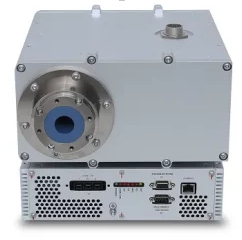
Original Equipment Manufacturers (OEMs) must develop X-ray equipment that balances imaging performance, space, weight, safety, and cost. Traditional systems may use separate tubes, high-voltage supplies, control electronics, and connections. Coordinating these parts can complicate integration.
An integrated design brings essential functions into one compact assembly. For OEMs evaluating integrated X ray source manufacturers, this approach offers a practical way to simplify system architecture, support consistent operation, and create equipment suited to demanding applications.
Understanding Integrated X-Ray Technology
An integrated X-ray source combines key components, typically the X-ray tube, high-voltage power supply, and control electronics, within a single unit. Depending on the model, the assembly may also incorporate cooling and radiation shielding features. Rather than sourcing and arranging each major component independently, an OEM can work with a coordinated module designed to operate as one system.
OEMs must still assess mounting, electrical input, control interfaces, thermal conditions, shielding, and regulatory requirements. However, a developed source module can reduce the separate elements that must be selected, connected, and validated.


See also: About Datrihelminen Life
1. More Efficient Equipment Integration
One of the strongest reasons to choose an integrated source is the simpler installation process. Separate components can require additional high-voltage connections, cable routing, brackets, enclosures, and coordination between suppliers. A compact integrated assembly can consolidate several of these requirements and provide defined mounting and interface options.
Fewer independent components can make equipment layouts easier to plan. Engineers can allocate space around a known source configuration, particularly in compact inspection cabinets, mobile scanners, robotic systems, and medical equipment.
2. Better Use of Available Space
Equipment manufacturers often need to balance performance with a smaller footprint. Security scanners, portable inspection systems, and robotic imaging devices may have strict limits on dimensions and weight. Combining major X-ray components in one housing can help reduce the space occupied by separate assemblies and simplify the overall arrangement.
A smaller package may leave more room for detectors, conveyors, motion systems, and controls. Final dimensions depend on the model, shielding, cooling, and application, but integrated architecture can support compact designs.
3. Coordinated Performance and Stable Output
X-ray imaging depends on controlled operating conditions. Voltage, current, focal spot, exposure timing, and thermal behaviour all influence the result. When major source components are designed to work together, their interfaces and operating characteristics can be coordinated as part of one solution.
Stable high-voltage output and emission current support repeatable imaging. OEMs should review specifications, duty cycle, output range, focal spot options, and thermal limits to confirm suitability for the workload.
4. Reduced Design and Supplier Complexity
Managing multiple component suppliers can increase communication, procurement, and engineering coordination. Different parts may have separate documentation, delivery schedules, interfaces, and support processes. An integrated source gives OEMs a more consolidated component to evaluate and incorporate.
This lets teams focus on image processing, automation, user interfaces, and application performance. System-level testing remains essential, but fewer separate source components may need managing.
5. Flexibility for Different Applications
OEMs serve markets with very different imaging requirements. Security systems may inspect baggage, parcels, or cargo. Food production lines use X-ray inspection to identify foreign contaminants and quality issues. Industrial equipment supports non-destructive testing, thickness gauging, and sorting. Medical applications include dental imaging and other specialised imaging systems. Electronics manufacturers use X-ray technology for component counting and inspection.
No single specification suits every task. Voltage, power, focal spot, beam angle, cooling, and configuration depend on the material and system. Multiple output options and customisation help OEMs match a source to the application.
6. Easier Planning for Safety and Shielding
Radiation safety must be considered from the earliest stages of X-ray equipment design. Shielding, enclosure construction, interlocks, warning indicators, operating procedures, and compliance testing remain essential responsibilities for the finished system manufacturer.
Some integrated sources include localised shielding, which may simplify parts of equipment shielding and protect nearby electronics under specified conditions. OEMs must still assess the complete system, verify radiation levels, and meet applicable regulations. Integration does not replace safety validation.
7. Maintenance and Long-Term Reliability
Reliability affects equipment availability, service planning, and customer confidence. A coordinated source module can simplify access to key X-ray functions and reduce the number of separate connections within the source arrangement. Robust construction, suitable cooling, and operation within specified limits also contribute to dependable service.
OEMs should review maintenance guidance, operating conditions, service support, replacement procedures, and documentation. The best choice is not necessarily the highest-output unit, but one that meets application needs and supports manageable maintenance.
8. Choosing the Right Integrated Source
A structured evaluation helps prevent costly mismatches. First, define the material, object size, inspection speed, and image detail required. Next, establish the necessary voltage, current, power, focal spot, and beam geometry. Consider available installation space, mounting arrangements, electrical input, cooling, communication interfaces, and operating environment.
Request datasheets and clarify customisation, lead times, testing, and technical support. Confirm compatibility with the detector, controls, and image-processing architecture. Validate the complete equipment under realistic conditions to reduce redesign. A useful comparison also considers the total cost of integration rather than the purchase price alone. Engineering hours, enclosure changes, cabling, installation, testing, service access, and downtime can all affect the economics of a design. Discussing these factors early with a supplier helps teams compare complete system requirements and avoid choosing a component that appears economical but creates extra work elsewhere. This broader assessment supports informed procurement decisions and helps align component selection with long-term product goals overall.
Conclusion
Integrated X-ray technology provides OEMs with a practical foundation for developing compact, reliable, and application-specific inspection equipment. By combining essential components, it simplifies integration, optimises equipment space, supports stable output, and reduces design complexity. Selecting suitable specifications and validating system performance remain essential. Partnering with experienced integrated X ray source manufacturers helps OEMs achieve dependable equipment designs and long-term operational efficiency.
VJ X-Ray develops integrated X-ray sources and high-voltage generators for OEM equipment manufacturers. Its IXS range combines essential source components in compact assemblies, with options tailored to application requirements. The company also offers HVL/HVG generators, engineering expertise, and technical support to help customers select a generator for X ray machine designs across security, medical, food, industrial, electronics, and analytical applications.