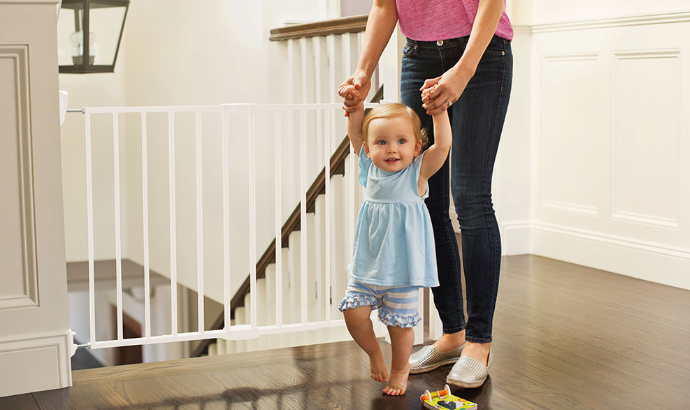
Stairs are one of the most dangerous places in any home for babies and toddlers. A simple fall can lead to serious injuries, which is why stair safety should be a top priority for every parent. As soon as your child starts crawling or taking their first steps, stairs become a major risk zone.
This is where baby gates play a critical role. But not all baby gates are made equal, and choosing the wrong type can create a false sense of security. In this article, you will learn which type of baby gate is safest for stairs, what features truly matter, and how to install and use them correctly to protect your child.
Parents often search for Baby Gates without realizing that some are designed only for doorways or flat areas. You can explore professional-grade and see what safety-focused designs look like in real homes.
Why You Need a Baby Gate for Stairs
The Risk of Unprotected Stairs
Stairs are one of the leading causes of home injuries in young children. Babies have poor balance, limited coordination, and no sense of danger. A single missed step can result in head injuries, broken bones, or worse.

Unlike furniture or sharp corners, stairs present a continuous fall risk. Once a baby starts moving, stairs become a daily threat if left unprotected.
When to Install a Gate
Most safety experts recommend installing baby gates as soon as your child can crawl, usually around 6 to 9 months old. If your baby is already pulling up or cruising along furniture, you should install gates immediately.
Do not wait until your child walks. By then, they are already strong enough to push, lean, and climb.
Types of Baby Gates Explained
Not every gate is safe for stair use. Understanding the different types helps you avoid common mistakes.
Hardware-Mounted Baby Gates
This is the safest option for stairs.
Hardware-mounted gates are screwed directly into the wall or door frame. This creates a solid and permanent barrier that cannot be pushed over.
These gates are designed to withstand pressure from leaning, shaking, or pulling. That makes them the best choice for the top of stairs, where a fall is most dangerous.
Best for:
- Top of stairs
- High-risk areas
- Strong or active toddlers
Pressure-Mounted Baby Gates
Pressure-mounted gates stay in place using tension between two walls. They are easy to install and do not require drilling.
However, they are not safe for the top of stairs. A baby can push against them and cause the gate to loosen or fall.
Best for:
- Doorways
- Hallways
- Bottom of stairs only
Retractable and Mesh Baby Gates
Retractable gates use mesh material that pulls across an opening. They look modern and save space.
While some models are rated for stair use, many are not strong enough for active toddlers. Mesh can sag, and some children learn to push through or crawl under.
These gates are better for low-risk areas or temporary use.
Freestanding and Play Yard Barriers
These gates are not designed for stairs at all. They are meant for open floor spaces and play zones.
Never use freestanding gates near stairs. They can tip over easily and provide almost no real protection.
Key Safety Features to Look For
Not all hardware-mounted gates are equally safe. Here are the features that truly matter.
Certification and Safety Standards
Look for gates that meet safety standards such as:
- ASTM (USA)
- JPMA (USA)
- EN (Europe)
These certifications mean the gate has been tested for strength, spacing, and durability.
Secure Latch System
The latch should:
- Be easy for adults to open with one hand
- Be impossible for children to open
- Lock automatically when closed
Avoid gates with weak plastic latches.
Bottom Clearance
The gap between the gate and the floor should be very small. Large gaps increase the risk of babies crawling under or getting stuck.
Bar Spacing and Height
Bars should be close enough that a baby cannot fit their head through. The gate should also be tall enough that climbing is difficult.
A good height is at least 75 cm or more.
See also: Unlocking the Secrets of Life: The Value of Secondary Biology Tuition
Where to Use Each Type of Gate
Top of Stairs
Only use hardware-mounted gates at the top of stairs.
This area requires maximum strength. A pressure gate here is extremely dangerous.
Bottom of Stairs
You can use either hardware-mounted or pressure-mounted gates here. The risk is lower because there is no fall from height.
Doorways and Hallways
Pressure-mounted gates work well in these areas. They are easy to remove and reposition.
How to Install Your Gate Safely
Measure Your Space First
Always measure the width of your stair opening or doorway. Many gates require extensions for wide spaces.
Never force a gate into a space it was not designed for.
Installation Tips for Hardware Gates
- Drill into solid wall studs when possible
- Follow the manufacturer’s instructions exactly
- Test the gate by pushing hard before trusting it
If the gate moves, it is not safe.
Common Mistakes to Avoid
- Installing pressure gates at the top of stairs
- Leaving gaps at the bottom
- Not checking screws regularly
- Using old or damaged gates
Maintenance and Safe Use Practices
Regular Safety Checks
Every few weeks, check:
- Screws and brackets
- Latch strength
- Overall stability
Children grow stronger quickly, and gates loosen over time.
When to Remove a Gate
Once your child can safely walk up and down stairs without help, usually around age 2 to 3, you can consider removing the gate.
However, every child develops differently. Do not rush this step.
Supervision Still Matters
No gate replaces adult supervision. Baby gates reduce risk, but they do not eliminate it.
Never rely on a gate as your only safety measure.
Summary and Final Recommendations
If you are protecting stairs, the safest choice is clear: always use a hardware-mounted baby gate at the top of stairs. Pressure-mounted gates should only be used in low-risk areas like doorways and hallways.
Look for strong materials, certified safety standards, secure latches, and proper installation. Avoid mesh and freestanding gates near stairs.
The right baby gate, installed correctly, can prevent serious injuries and give parents peace of mind. Stair safety is not about convenience. It is about choosing the strongest barrier possible for the most dangerous part of your home.